The SIMULIA Innovation Day is an in-person, user-focused event concentrating on SIMULIA technologies and your experiences, making this event a place where users of SIMULIA technology can meet, share ideas, network, and learn how innovative technology solutions can empower simulation processes. This conference will provide a forum for practicing engineers and researchers to exchange ideas and experiences in all aspects of simulation technologies, especially focusing on Structures and Electromagnetics. Attendees can expect to hear presentations from the SIMULIA User Community and software solutions updates.
What to expect:
• Demonstrations and technology updates; Learn how industry leaders are using SIMULIA’s portfolio
• Customer presentations on a variety of technology topics
• View SIMULIA presentations by technical experts on popular topics and much more
Plenary Presenters
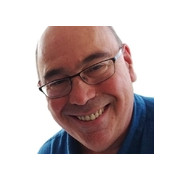
Mark Bohm, Dassault Systèmes
Mark Bohm, Dassault Systèmes
Mark has been with SIMULIA for over 30 years. Contributing in a variety of sales and technical management roles, he currently leads a global technical sales group supporting advanced applications. He has degrees in structural engineering from Brown University and the University of California, Berkeley
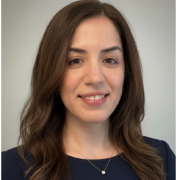
Eylul Simsek, Intel Corporation
Eylul Simsek, Intel Corporation
Eylul Simsek earned her Ph.D. in Mechanical Engineering from University of California, Los Angeles, where her research focused on radiation transfer through droplet-covered substrates. Following the completion of doctorate, she joined Intel as a Packaging R&D Engineer. Over the past four years at Intel, she has focused on addresing key challenges associated with the underfill encapsulation of advanced packages. She has contributed state-of-art solutions through the integration of process innovation and tool development, leveraging her strong background in thermal and fluid sciences. Outside the work, she likes playing tennis and spending time with her friends.
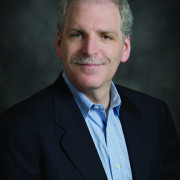
Dr. Steven Levine, Dassault Systèmes
Dr. Steven Levine, Dassault Systèmes
Dr. Levine is a prominent voice in the field of biomedical engineering and the leader of virtual human modeling at Dassault Systèmes, a multinational software company renowned for its expertise in 3D design, engineering, and simulation software. As the founder and Executive Director of the Living Heart Project, Dr. Levine spearheads a groundbreaking global initiative to develop virtual twins of the human body. This innovative project has significantly advanced medical research, drug and device development, and biomedical education.
Dr. Levine served as the principal investigator on a five-year collaboration with the US FDA, aimed at defining the use of virtual human twins to accelerate clinical trials and regulatory approval processes. His pioneering work has earned international acclaim and numerous prestigious awards, underscoring his profound impact on the fields of medicine and biomedical engineering.
Dr. Levine's contributions have been recognized by his election to the AIMBE College of Fellows. He holds a PhD in Materials Science and Engineering from Rutgers University. His visionary leadership continues to drive significant advancements in biomedical research and healthcare innovation.
Special Guests
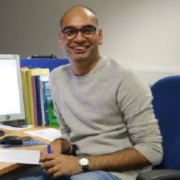
Dr. Harkamaljot Kandail, Medtronic
Dr. Harkamaljot Kandail, Medtronic
Dr. Harkamaljot Kandail obtained his PhD from Imperial College London, UK, in 2016, where he developed computational models to quantify the efficacy of stent grafts for endovascular treatment of abdominal aortic aneurysms. Following his PhD, he did two postdocs, first at Marquette University, USA, and second at TU/e, Netherlands. Following his postdocs, he worked at the University of Warwick, UK, as a senior teaching fellow, and has been a senior Principal Engineer at Medtronic since 2022. He is interested in computer-aided biomedical engineering, with particular emphasis on integrating clinical imaging techniques with computational cardiovascular biomechanics. The overarching objective of his research activities is to elucidate the roles that structural deformations and hemodynamics play in the development and progression of cardiovascular disease, and to design novel biomedical devices to treat such diseases.
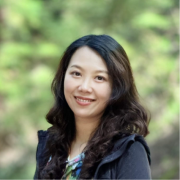
Huan Liao, PhD, Meta Reality Labs
Huan Liao, PhD, Meta Reality Labs
Huan Liao, PhD, is an Antenna Engineer with nearly 20 years of expertise in simulation-driven hardware design. She earned her doctorate from the University of California, Davis, where she became an early adopter of CST Studio Suite in 2007.
Following graduation, Huan spent nine years at Google as an Antenna/RF Lead, guiding wireless development from
early architecture through mass production for flagship consumer devices including Pixelbooks, virtual reality hardware, and wearables. During her tenure, she introduced CST Studio Suite to Google's Consumer Hardware group and served as the internal Product Champion, building and mentoring a rapidly expanding user community.
Currently, Huan is an Antenna Tech Lead within the Wearables group at Meta Reality Labs, where she leads the design, simulation, and characterization of high-performance antennas for next-generation augmented reality hardware.
Officially recognized as a SIMULIA Champion by Dassault Systèmes in 2022, Huan is a passionate advocate for leveraging advanced simulation to demystify the "black magic" of antenna design — building engineering intuition by ensuring that physical hardware performance mirrors virtual models with precision.
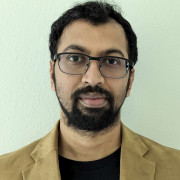
Bala Shanmugam, Google
Bala Shanmugam, Google
Bala Shanmugam received his master’s degree in 2011, specializing in electromagnetic systems. In the last 13+ years, he has designed custom antennas for various electronic device form-factors such as smart-phone, tablet, smart-watch, trackers, hearables, smart-home accessories, streaming media devices, LTE nano/femto-cell, water-meter, OBD-II auto-accessory. He has five approved patents, five technical papers, and has used CST Studio Suite for over ten years for advanced antenna/RF simulations with applications ranging from a few MHz to mm-Wave frequencies. At Google, he leads the antenna design for head-worn devices with a focus on optimizing wireless performance for body-worn use-cases. His research interests include highly integrated antenna sub-assemblies, body-immune antenna design, optimal human phantom modeling, novel EM materials and emerging communication technologies.